
Table of Contents
ToggleStainless steel laser-cutting design is a very critical factor in manufacturing industries today mainly because of its accuracy and flexibility. Realizing such aspects gives maximum outcomes and quality in every implementation approach and style.

This blog focuses on some aspects of laser-cutting for architectural metal. Thus, providing insights into material properties and technologies, as well as post-cutting actions, we will try to help you accomplish efficient and effective projects of laser cutting.
Material Thickness and Type
The diameter of stainless steel has to be correctly chosen, as well as the type of stainless steel for a definite degree of accuracy in laser cutting. All these aspects affect the quality of the cut, time, and success, of particular designs that you want to accomplish.
Impact on Cutting Precision
Thicker stainless steel is more resistant to corrosion and therefore consumes more power and considerably lowers the cutting edge’s smoothness. One should therefore always consider the thickness and the ability of the laser cutter when doing the cutting.
Grades of Stainless Steel
There are, of course, differences in the characteristics of the various grades, for example, 304 and 316. Concerning grade, this affects the cutting process, heat resistance, and corrosion resistance and hence the overall quality and looks of the final product.
Cutting Speed and Power Settings
The type of stainless steel and thickness dictate the best laser setting for the application. Thicker materials require the slower speed of cutting and power which are inherent implications of this technique and thus increases production period and costs as well.
Comprehending how focused thickness and stainless steel grade impact laser cutting is critical for producing high-precision shapes. In selection, one should be very careful to ensure that your production maintains beauty and reliability when completed.
Laser-Cutting Technology
Selecting the right laser-cutting technology has been deemed important to get the right cuts in the stainless steel. Whether it is choosing the right laser type to be used to the cutting speed, technology will always define the success of the project.
Types of Lasers
CO2 Lasers
Co2 lasers are universal and scribe through any material they do thicker stainless steel also. They might not be as refined though to allow for designs with a higher degree of accuracy.
Fiber Lasers
Thinner stainless steel is cut by the fiber lasers effectively and efficiently. These are well suited for finer cuts incising and are less energy intensive than CO2 lasers.
Cutting Speed and Quality
Speed Efficiency
Higher values of the cutting speed mean less time consumed in the cutting process but good results depend on the size and type of material being used.
Quality Balance
High-quality cutting entails working at different speeds, power settings and the characteristics of the material to be cut to reduce on roughness and distortion.
Knowledge of laser-cutting technology is vital in attaining effective and quality cutting of stainless steel. The correct choice of laser type and control of speed and setting make the final product according to the design and functional requirements.
Design Complexity
Stainless steel demands greater design intricacies for laser-cutting hence feasibility and accuracy are influenced in this regard. This section advances and explains the challenges in generating the small parts of the patterns and the quality simultaneously.
Intricate Patterns and Details
Challenges with Fine Details
Highly elaborate patterns are applied to challenge the limits of laser-cutting. Understanding these constraints makes sure that the depth of the cut is as elaborate as the design of the laser.
Design Software Compatibility
Choosing the right design software helps in translating artwork from plans on a computer monitor to laser-cut stainless steel especially where intricate designs are involved.
Tooling and Setup
Optimizing Tool Setup
Difficult layouts might need particular tools and conditions. The laser concentration, velocity, and intensity have to be adjusted to allow the precise cutting of intricate shapes.
Customization for Unique Designs
Adjustments in tooling can be made for specific customer requirements so that unique or intricate designs are possible and can achieve high-quality surface finish.
Knowing the challenges of design, they can recreate repetitive designs with a lot of ease and precision. This means that quality tooling and choice of software, have a central role to ensure that an idea turns into an elegant piece of stainless steel.
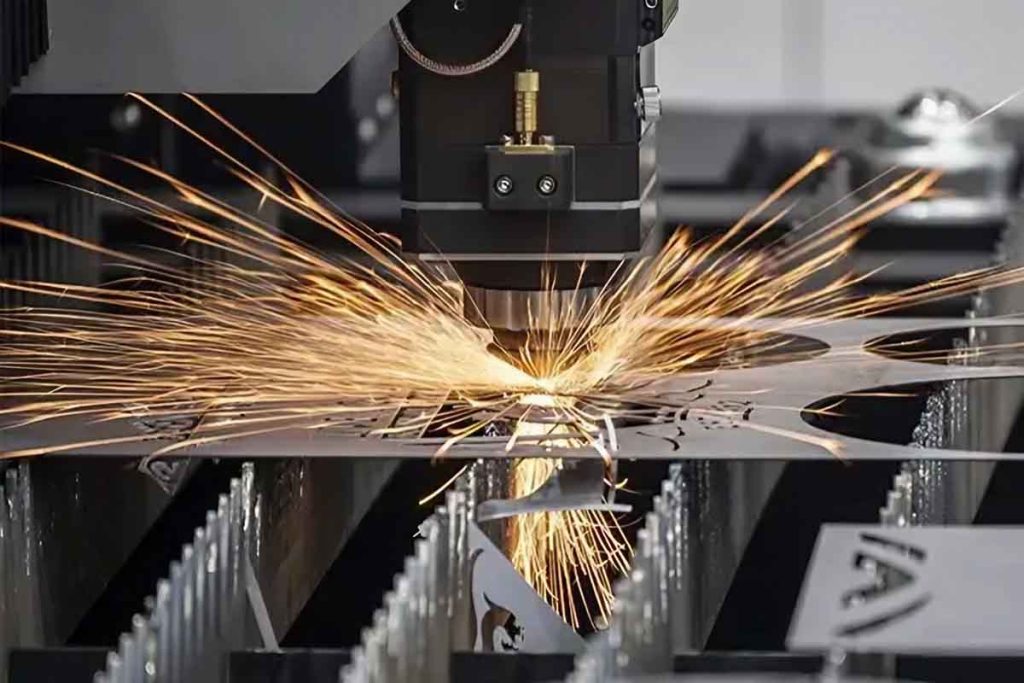
Heat Management
Temperature control of the material especially during laser-cutting of stainless steel is paramount in ensuring high accuracy as well as quality. Ideal heating eliminates standard issues of warping and distortion and is in this case the best solution.
Preventing Warping and Distortion
Heat deforms the metal through bending hence reducing its cutting efficiency and accuracy. Slowing down the rate of cutting, installing a coolant system, and proper setting of lasers offer better and cleaner outcomes as heat is minimized.
Material Properties and Heat Tolerance
Depending on the grade of the stainless steel, the materials’ behavior to heat affects cutting parameters. For instance, thicker materials and those made from lower-grade alloys may be cut slowly so as not to be affected by the thermal effect.
Controlling heat output generates a thinner kerf, and improved edge quality in stainless steel laser-cutting. Controlling laser settings, the properties of the material, and cooling techniques helps to achieve perfect results without damaging metals.
Cost Considerations
Cost factors are very important for any successful stainless steel laser-cutting ventures to be undertaken. Budgeting of material and operational costs helps in developing a good product by meeting the required quality as well as the stipulated costs.
Material Costs
Selecting a grade of stainless steel has a direct impact on the overall cost of the project. It has better grades better Corrosion resistance and longer life but comes at a premium hence, one needs to balance between the performance and the price.
Operational Costs
Some of the operational costs include energy costs, machine costs, and wear and tear costs among others. Laser cutters available in the market today are much more powerful and need to be maintained but these expenses are also well manageable.
Production Time and Labor Costs
The time taken in the production process also affects the costs tremendously. Detailed designs or the use of thicker material hikes cutting times and labor costs but these are controllable by adopting simpler designs or accelerating processes.
Material, operation, and labor costs are evaluated in stainless steel laser-cutting hence balancing the budget as per the performance achieved. Cost control can maximize the achievement of aims by producing high-quality work, all at an affordable price.
Post-Cutting Processing
The stainless steel cutting process needs a finishing process to get the best quality end product. This part contains recommendations on how to achieve the best results, such as further manipulations with the leather and its correct storage.
Finishing and Deburring
Importance of Finishing
It is imperative to have a smooth finish to produce an aesthetic piece as well as to guarantee functionality. Enhances the aesthetics and strength of stainless steel parts.
Deburring Techniques
Use other procedures such as sanding or grinding, debark, or shed sharp edges. They assist in the realization of the intended end-post without interruption and incidents.
Surface Treatments
Other treatments can be used like passivating that would assist in enhancing the corrosion resistance of the stainless steel parts besides improving their appearance.
Handling and Storage
Proper Handling Techniques
General measures to follow in order not to cause any harm to the surface of the stainless steel sheets such as scratches, dents, etc. while conveying them or even during lifting.
Storage Solutions
Good storing methods are meant to maintain the quality of the cut pieces, and some of the intentional ways of degrading the pieces are prevented for longer durability or performance.
Inspection Before Use
Scrap finished products to look at the damages or bad workmanship before the final installation or before being incorporated into service for better quality of the products and services.
Post-cutting treatment for stainless steel improves the cosmetic looks and corrosion resistance of parts made from the material. Proper surface finishing, handling, and storage are important for getting the best results and service to your projects.
Frequently Asked Questions (FAQs)
Q1: What factors should I consider when designing for stainless steel laser cutting?
The most important factors to note in a successful project of stainless steel laser cutting are the material thickness and type, laser technology, design complexity, heat management, cost, and post-cutting processing.
Q2: How does stainless steel thickness affect laser cutting results?
Tighter stainless steel requires more laser energy, slower cutting rate, and more time to manufacture, with a probable decrease in edge finish, and this demands specific considerations about precision and finish.
Q3: Why does the stainless steel grade matter in laser cutting?
Grades such as 304 and 316 exhibit differing levels of corrosion resistance, heat resistance, as well as cutting behaviour which directly affect cut quality, durability as well and the visual appearance of the end product.
Q4: What types of laser technology are used for stainless steel cutting?
Types of lasers that are commonly used are the CO₂ lasers, which are effective when doing thick cuts, and the fiber lasers, which are effective when doing fine and detailed cuts with a lot of accuracy and less energy.
Q5: How does design complexity influence laser cutting outcomes?
Complex shapes or detailing involve a lot of specific software, equipment, and installation to prevent cutting mistakes, distortion, or longer production in complex stainless steel jobs.
Q6: What role does heat management play during laser cutting?
Adequate control of heat eliminates warping, distortion and edge defects; the heat is controlled through cooling systems, cutting speed, and using improved settings on the laser.
Q7: Can laser cutting costs be reduced without sacrificing quality?
Yes – the balancing of material selection, effective cutting parameters, and simplified designs is all useful in controlling the material and machine costs and labour costs, and achieving good results.
Q8: What post-cutting processes should be planned after laser cutting?
There are processes after cutting, which are finishing, deburring, surface treatments (such as passivation), inspection, good handling, and storage that preserve the quality of the cut and the integrity of the material.
Q9: How does laser cutting speed affect finished parts?
Excessive speed can compromise quality and add roughness; the speed should be optimum to achieve the efficiency of production with smooth, accurate edges, depending upon the type and thickness of the material.
Q10: Why is design software compatibility important in stainless steel laser cutting?
The correct design software also makes sure that it translates the art to the actual components correctly, aids in the finer details processing, and it becomes more compatible with the laser control systems to cut the parts without errors.
Conclusion
Significant considerations that relate to material thickness, laser technology, design establishment, heat treatment, cost, and post-cutting processes are vital to get precision and efficiency in stainless steel laser-cutting design and projects, resulting in maximum effectiveness in the long run.


Hola!!, me encanta tu forma de realizar el contenido, el mundo necesita mas gente como tu
It was interesting to know that laser cutting doesn’t require for extensive secondary processing. My friend wants laser cutting for their products. I should advise him to turn to a firm that offers a wide range of engineering services.
Your exploration of the essential factors for stainless steel laser cutting design provides valuable insights for designers and manufacturers working with this versatile material. The emphasis on precision and the impact of design choices on the laser cutting process is a crucial aspect often overlooked. By delving into factors such as material thickness, cutting speed, and assist gases, you’ve created a guide that serves as a blueprint for successful stainless steel laser cutting projects. Your article not only educates but empowers readers to optimize their designs for the best results. It’s clear that your expertise in the field shines through, making this piece an indispensable resource for those looking to achieve excellence in stainless steel laser cutting.